Falling Down the Suno Rabbit Hole
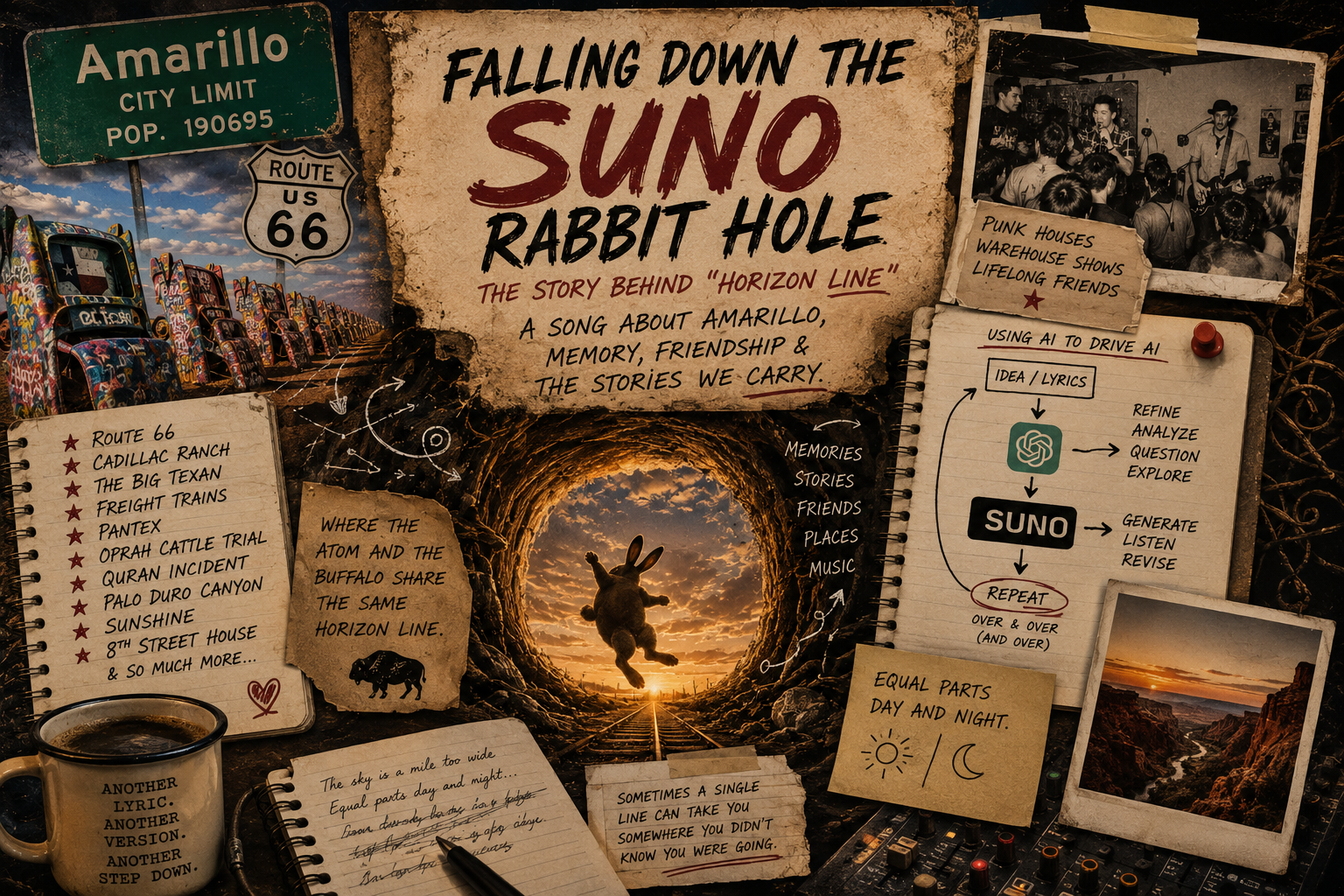
Falling Down the Suno Rabbit Hole
Following the Horizon Line
Over the last year I've found myself using AI in ways I never expected.
As a piano technician, musician, teacher, recording enthusiast, and small business owner, I've used ChatGPT to help organize website content, research equipment, troubleshoot studio problems, brainstorm ideas, and think through projects.
What surprised me wasn't that AI could answer questions.
What surprised me was how useful it became as a research assistant, creative collaborator, and sounding board.
Recently that process led me down a different rabbit hole: AI-generated music.
Curious about what tools like Suno could do, I started working on a song inspired by Amarillo, Texas. What began as a simple idea turned into several days of generating versions, listening carefully, taking notes, and making revisions.
I'd create a version in Suno, then open ChatGPT and start asking questions.
Why does this section work?
Why doesn't that line land?
What happens if the song leans more punk? More Americana? More personal?
Then I'd take those ideas back into Suno and try again.
At some point I realized I was using AI to drive AI.
Suno generated possibilities. ChatGPT helped me analyze them. I sat in the middle making decisions, rejecting ideas, refining lyrics, and figuring out what the song actually wanted to become.
The process felt surprisingly familiar. It wasn't that different from building a website, tuning a piano, recording a track, or mixing a song. The tools were different. The creative process wasn't.
In the end, Horizon Line became more than a songwriting experiment. It became a reminder that creativity still comes from curiosity, judgment, and a willingness to explore.
Sometimes the most interesting discoveries happen when you follow an idea a little farther than you originally planned.
Below is one of my favorite versions of Horizon Line so far.
It's not necessarily the final version—and that's part of what makes this process interesting. Every new prompt, lyric revision, and arrangement idea opens up another possibility. This particular version captures a lot of the Americana, punk, ska, storytelling, and Texas imagery that I was chasing when the project began.
If you'd like to hear other versions, alternate arrangements, and some of the many experiments that came out of this process, you can find them on my Suno profile. One of the most fascinating parts of working this way is hearing how the same song can evolve into something completely different while still preserving its core identity.
Thanks for listening, and welcome to the rabbit hole.
Horizon Line
West wind screaming down Route 66
Dragging dust past old crucifixes
Past Cadillac Ranch and the Big Texan signs
Freight trains shaking up Panhandle minds
Feedlots smoking in the morning sun
I-40 dreams and nowhere to run
The sky is a mile too wide
Equal parts day and night
This is Bomb City
Where the atom and the buffalo
Share the same horizon line
Bomb City
Where the cattle graze
And the warheads wait
Underneath the same Texas sky
Bomb City
The wind, the dust
The horizon line
Out at Pantex beyond the wire
Cold War ghosts and prairie fire
Thunder sleeping underneath the clay
Waiting for a world that never came
Yellowcake torn from the desert stone
Poisoned water where the miners called home
The companies left, the lawyers smiled
The prairie kept the evidence filed
White trucks rolling down the road
Carrying another secret load
Some things disappear from sight
But they still cast shadows in the night
This is Bomb City
Where the atom and the buffalo
Share the same horizon line
Bomb City
Where the freight trains roll
And the west wind blows
Through every heart and every mind
Oprah on TV talking mad cow disease
The cattlemen answered, "Sue her, please"
Six long weeks beneath the courtroom lights
Amarillo picking one more fight
A preacher hit the park with a camera crew
Holding up a Quran for the evening news
He steps forth with the flame
When a skateboard kid came flying into frame
Snuck up behind him and took his Quran
"Dude, you have no Quran!"
Sunshine sang at the 8th Street house
Brewing up his homemade stout
Borrowed amps and smoke in their eyes
Singing every word like a battle cry
Football lights and warehouse bands
Cadillac, a weapon, wheel in the wrong hands
Everybody looking for a way through
Everybody trying to make something true
Amarillo by morning, the canyon burning red
Older than the bomb and older than the brand
The helium monument points toward space
While tumbleweeds attack the human race
And somewhere north the Cold War Horse stands
Gas mask staring over poisoned land
From Rocky Flats to Pantex down the line
The atom crossed the prairie one piece at a time
This is Bomb City
Where the atom and the buffalo
Share the same horizon line
Bomb City
Funny, haunted, proud and strange
A town that never seems to change
Bomb City
Pantex lights
Palo Duro sunrise
Freight trains rolling through the night
Bomb City
The wind, the dust
The horizon line
Route 66
Cadillac Ranch
West Texas wind
Bomb City
Where the atom and the buffalo
Share the same horizon line
Equal parts day and night
The same horizon line
References, Stories & Rabbit Holes
One of the things I enjoyed most about writing Horizon Line was discovering how many of the lyrics connected to real places, events, people, and stories from Amarillo and the Texas Panhandle.
Some of these references are historical. Some are personal. Some are both.
If you're curious about a few of the things mentioned in the song, here are some places to start.
The Cold War Horse, Rocky Flats & Pantex
One of the more unexpected inspirations behind Horizon Line came from Colorado rather than Texas.
After moving to Colorado, I became fascinated by the history of Rocky Flats and its connection to Pantex near Amarillo.
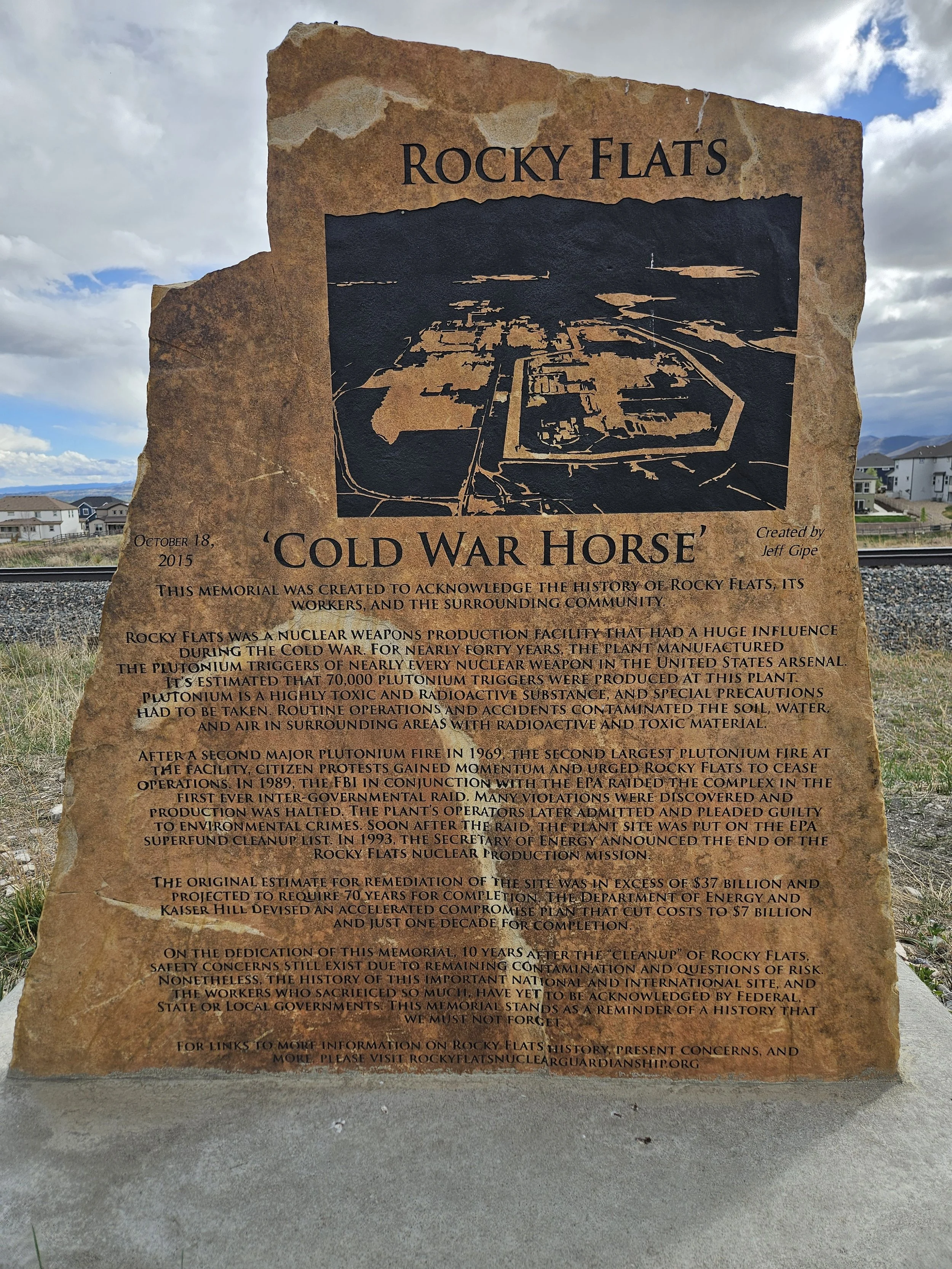
Rocky Flats manufactured plutonium triggers for nuclear weapons. Pantex became the facility responsible for assembling and maintaining the nation's nuclear stockpile. Though separated by hundreds of miles, the two sites were linked as part of the same Cold War infrastructure.
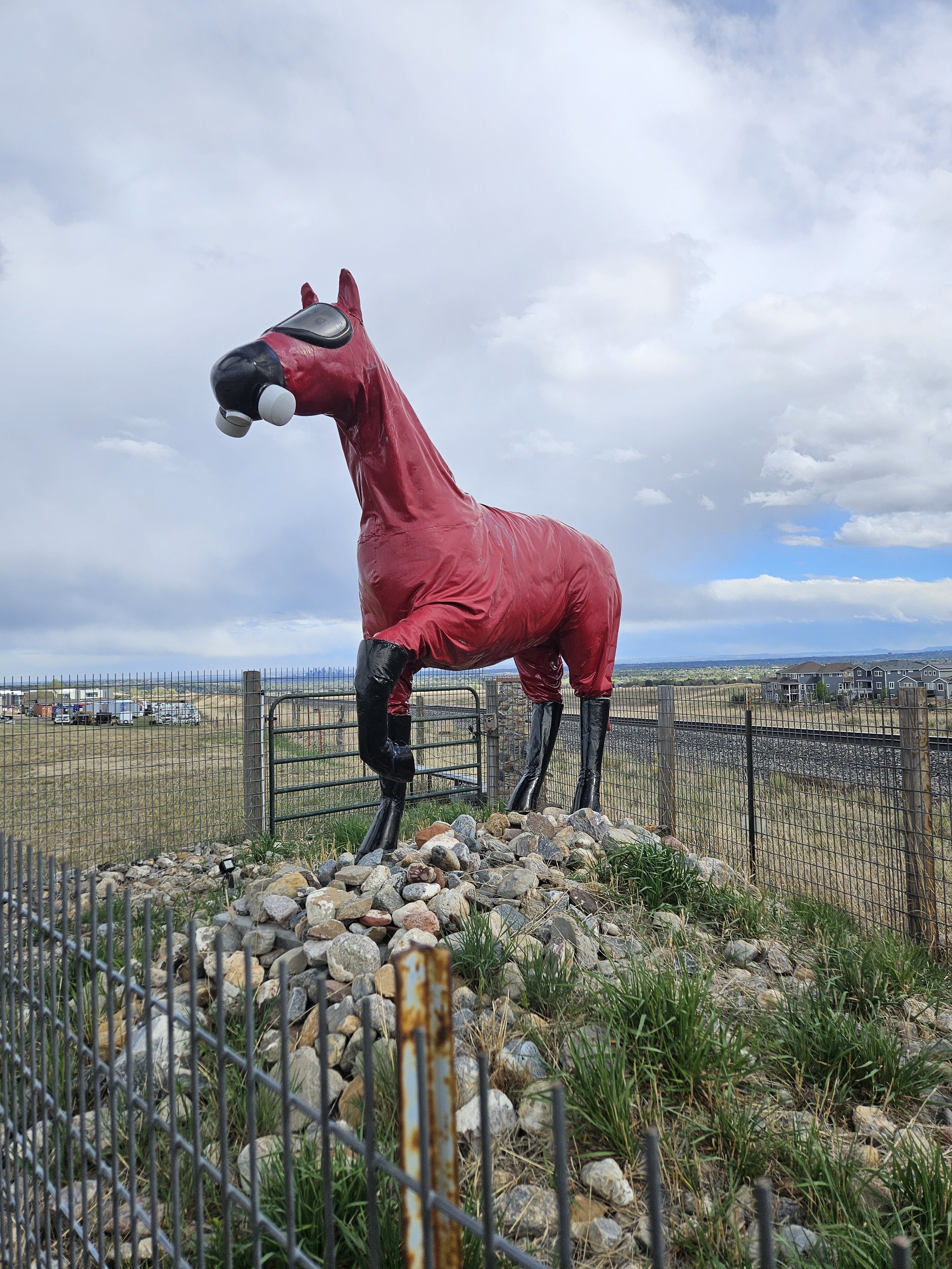
Near Rocky Flats stands the "Cold War Horse," a sculpture depicting a horse wearing a gas mask. It's one of those strange roadside landmarks that is both unsettling and fascinating.
At some point I realized that the story of Rocky Flats and the story of Pantex were connected.
That connection eventually found its way into the song:
"And somewhere north the Cold War Horse stands
Gas mask staring over poisoned land
From Rocky Flats to Pantex down the line
The atom crossed the prairie one piece at a time"
Pantex
Located northeast of Amarillo, Pantex is the primary facility responsible for the assembly and disassembly of the United States nuclear weapons stockpile.
Its presence has shaped the region for decades and is one of the reasons Amarillo is sometimes referred to as "Bomb City."
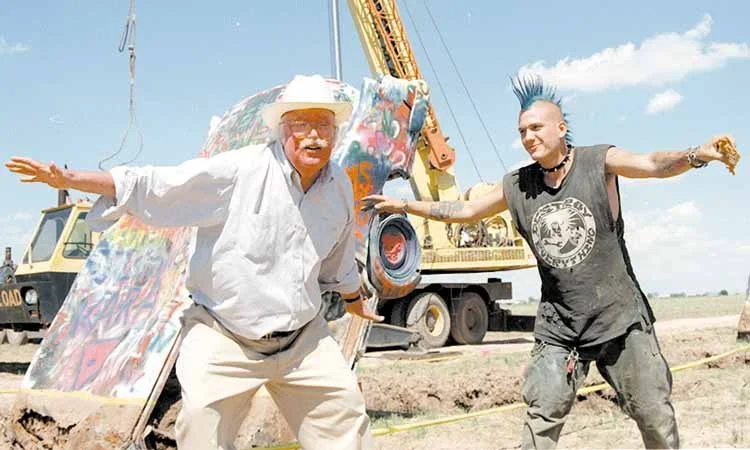
Cadillac Ranch
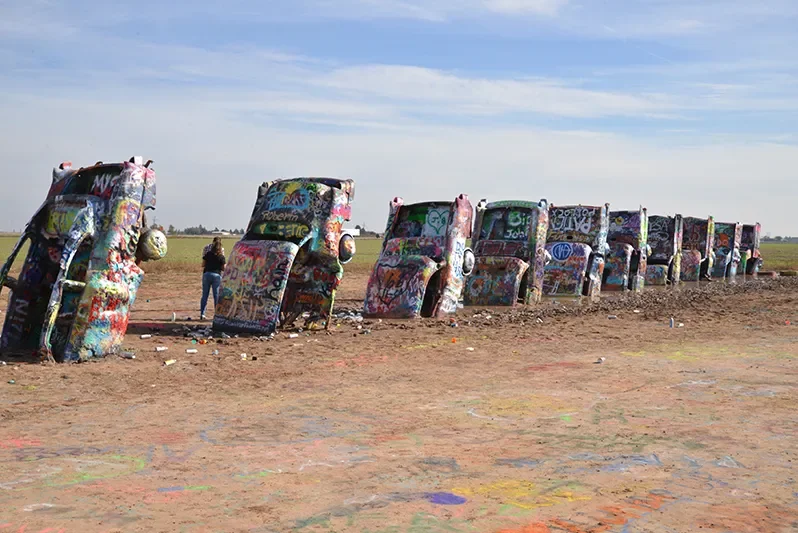
One of the most recognizable landmarks on Interstate 40, Cadillac Ranch consists of ten Cadillacs buried nose-first in the Texas prairie. It's equal parts public art installation, roadside attraction, and cultural icon.
Palo Duro Canyon
Often called the "Grand Canyon of Texas," Palo Duro Canyon is one of the largest canyon systems in North America. The canyon serves as an important backdrop to the final verses of the song and has been inspiring artists, musicians, and travelers for generations.
Route 66
Historic Route 66 runs directly through Amarillo and remains one of the defining cultural landmarks of the city. Many of the images in the song—freight trains, roadside attractions, giant signs, old motels, and endless highways—are tied to the Route 66 corridor.
"Dude, You Have No Quran"
Yes, this actually happened.
The line comes from a real Amarillo incident that became an internet classic when a local preacher attempted to burn a Quran and a skateboarder intervened in unforgettable fashion.
Brian Deneke
Brian Deneke was a well-known member of the Amarillo punk community whose death in 1997 became a defining moment for many people in the local music scene.
The line:
"Cadillac, a weapon, wheel in the wrong hands"
references that tragedy and the impact it had on a generation of Amarillo musicians, artists, and outsiders.
For those interested in learning more, the film Bomb City was inspired by the events surrounding Brian's life and death.
Sunshine & The 8th Street House
Unlike many of the references above, this section is personal.
The bridge was inspired by memories of friends, music, house shows, late-night conversations, borrowed gear, and the strange sense of community that forms around local music scenes.
For me, that section became the emotional center of the song.
The Horizon Line
The title itself became one of the recurring themes that survived nearly every revision.
The line:
"Where the atom and the buffalo share the same horizon line"
started as an image and gradually became a way of thinking about the region itself—a place where old and new, history and future, prairie and technology, memory and change all seem to exist together beneath the same sky.
If you've made it this far, thanks for joining me down the rabbit hole.