Building the Studio Environment
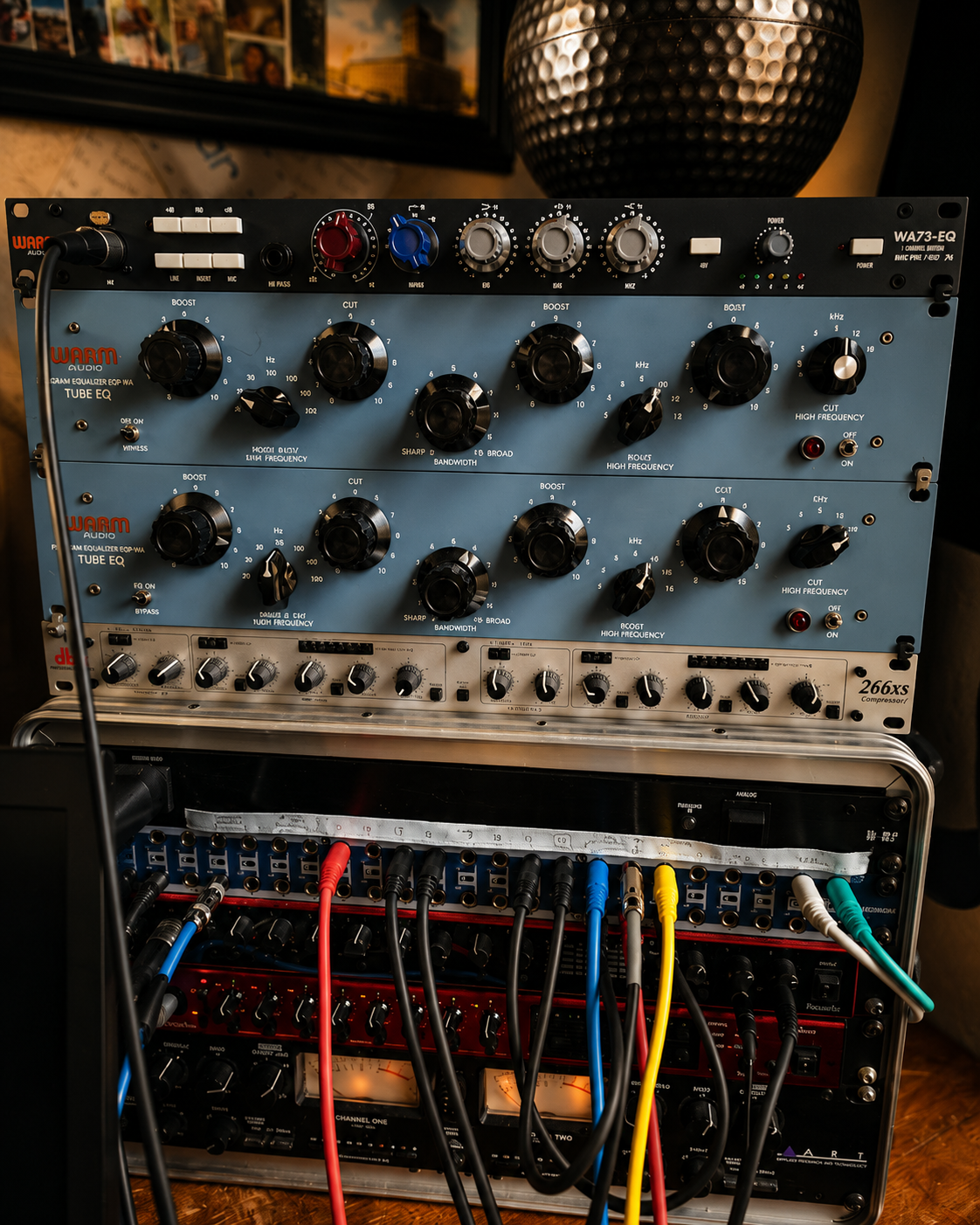
The studio has gradually become more than a room filled with instruments and recording equipment. It continues evolving into a space centered around improvisation, rhythm, experimentation, and capturing ideas as naturally as possible. Rather than building around a single style or fixed outcome, the goal has been to create an environment that encourages discovery.
Much of my work moves between acoustic and electronic worlds. Piano, tabla, percussion, harmonium, and keyboards often intersect with microphones, signal chains, effects, and recording tools that shape and extend the sound. I’m increasingly interested in the space where performance and production begin to overlap — where a recording setup doesn't simply document music but becomes part of the creative process itself.
Lately I've been exploring hybrid analog and digital workflows using Ableton alongside outboard gear, layered percussion textures, spatial effects, and live recording approaches. Small changes in microphone placement, signal routing, compression, or room atmosphere can completely alter the way an instrument feels and how ideas emerge.
Working as a piano technician has also deeply influenced the way I listen. Spending long days focused on tuning, resonance, touch, and the physical behavior of instruments creates a different relationship with sound. Sometimes that attention carries into late-night recording sessions where a simple piano tone, drum stroke, or resonance becomes the beginning of an entirely new idea.
More than a finished destination, the studio is an ongoing process — a place for listening, experimentation, and allowing unexpected things to happen.